
Reimagining eyecare booking
Product Concept, User Journey
Preface
I recently booked a routine eye exam and found the experience to be more complex than expected for a simple healthcare task.
The flow required making multiple decisions upfront with limited guidance, prompting a self-initiated redesign focused on clarity, speed, and trust.
— — — — — —
Problem
The existing experience uses an embedded booking widget that presents all options at once. Users must evaluate service type, location, and eligibility simultaneously before the system establishes context (e.g., new vs returning patient).
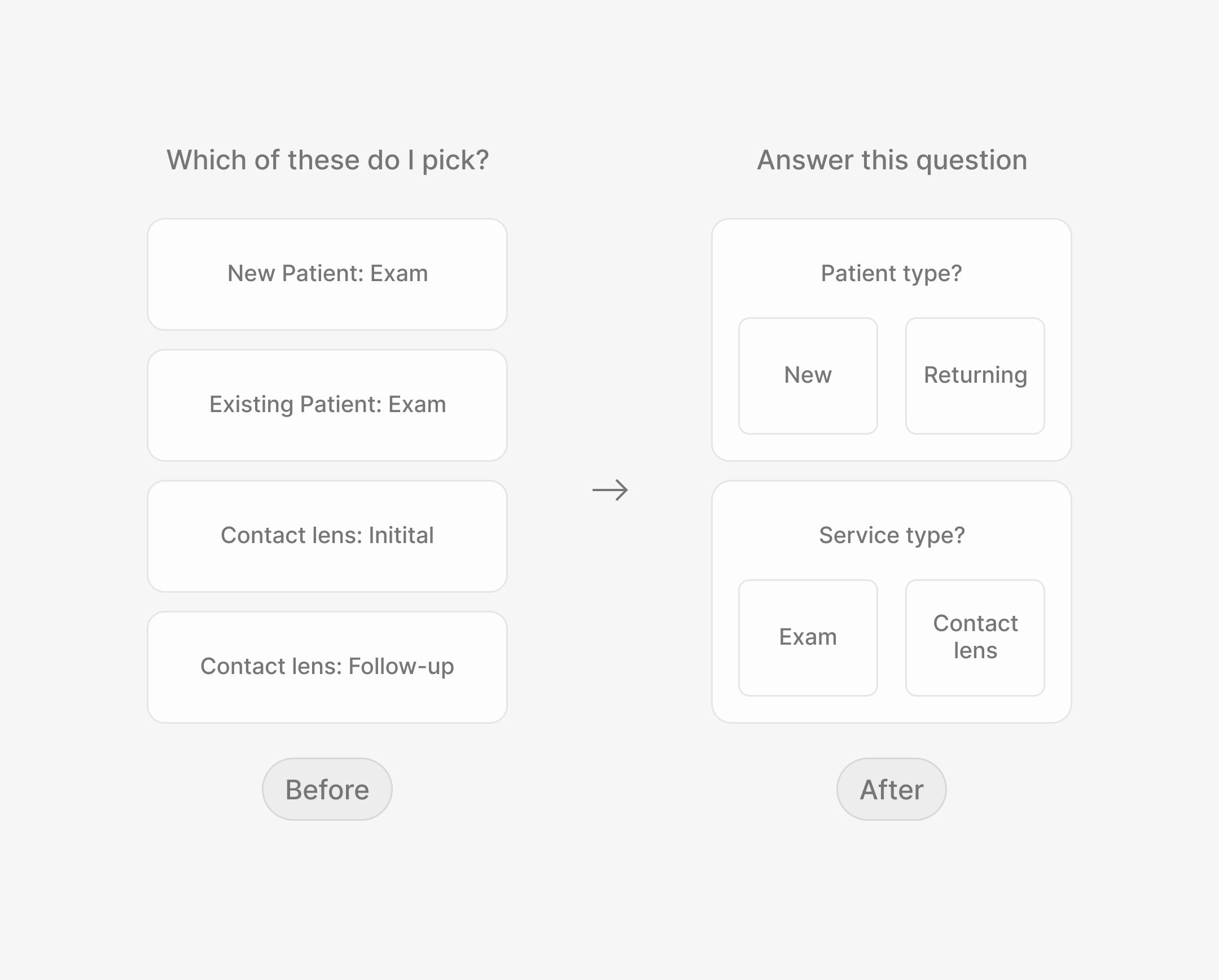
This creates a flat decision structure where too many variables are introduced too early, increasing cognitive load and reducing confidence in selection. Modal-based interactions also limit usability, particularly on mobile.
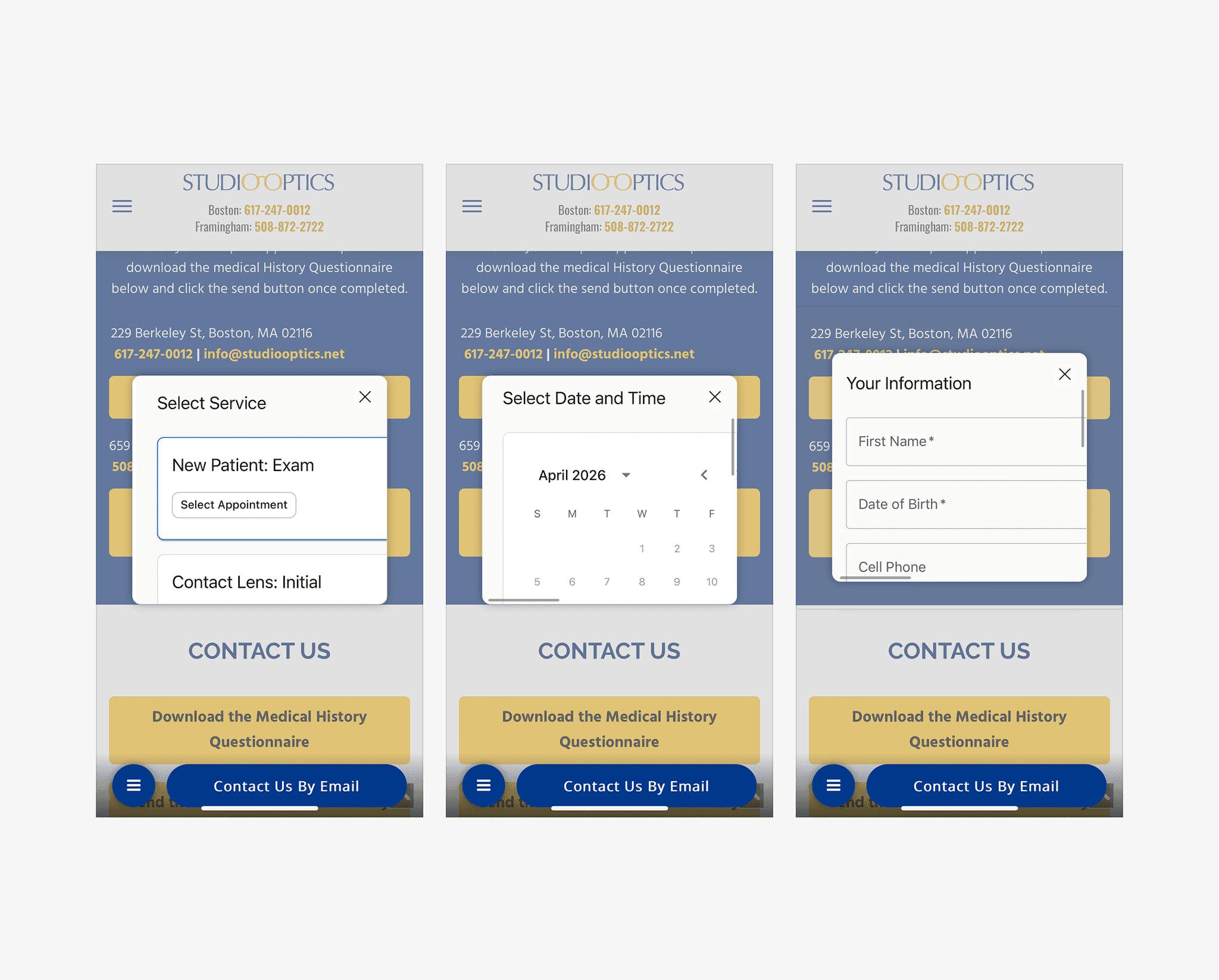
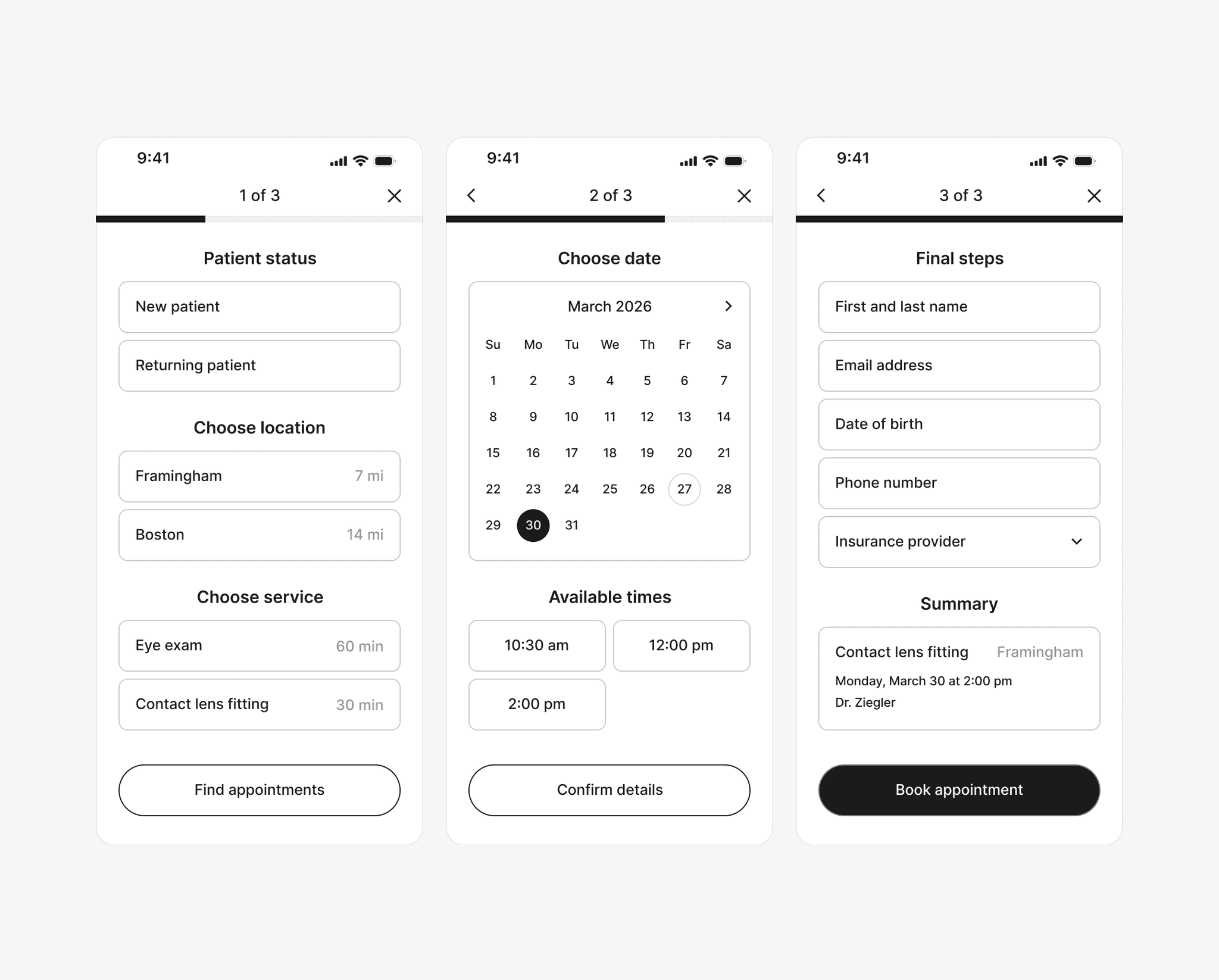
Early cognitive overload, driven by a modal-heavy flow
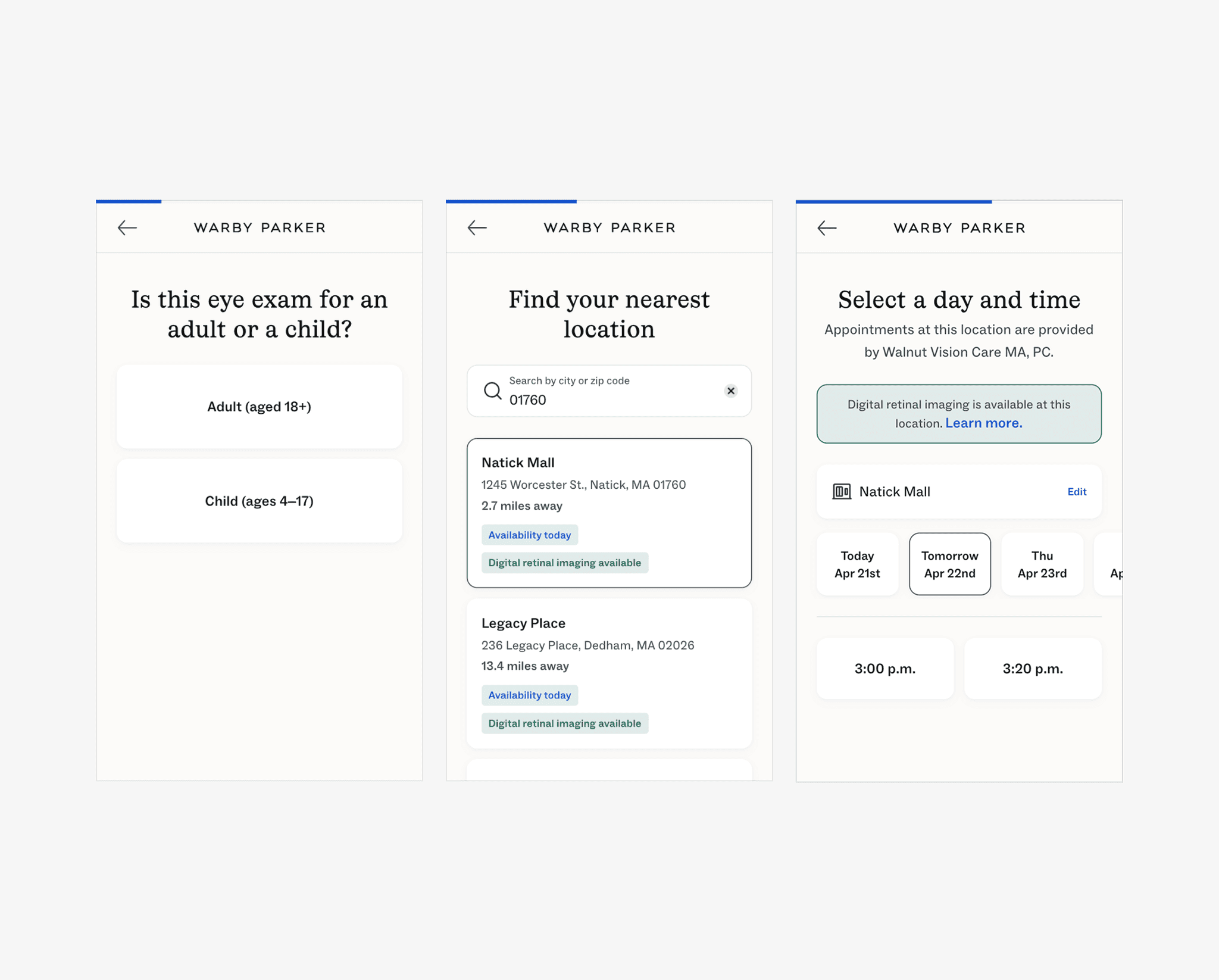
Stepper flow example from Warby Parker
Solution
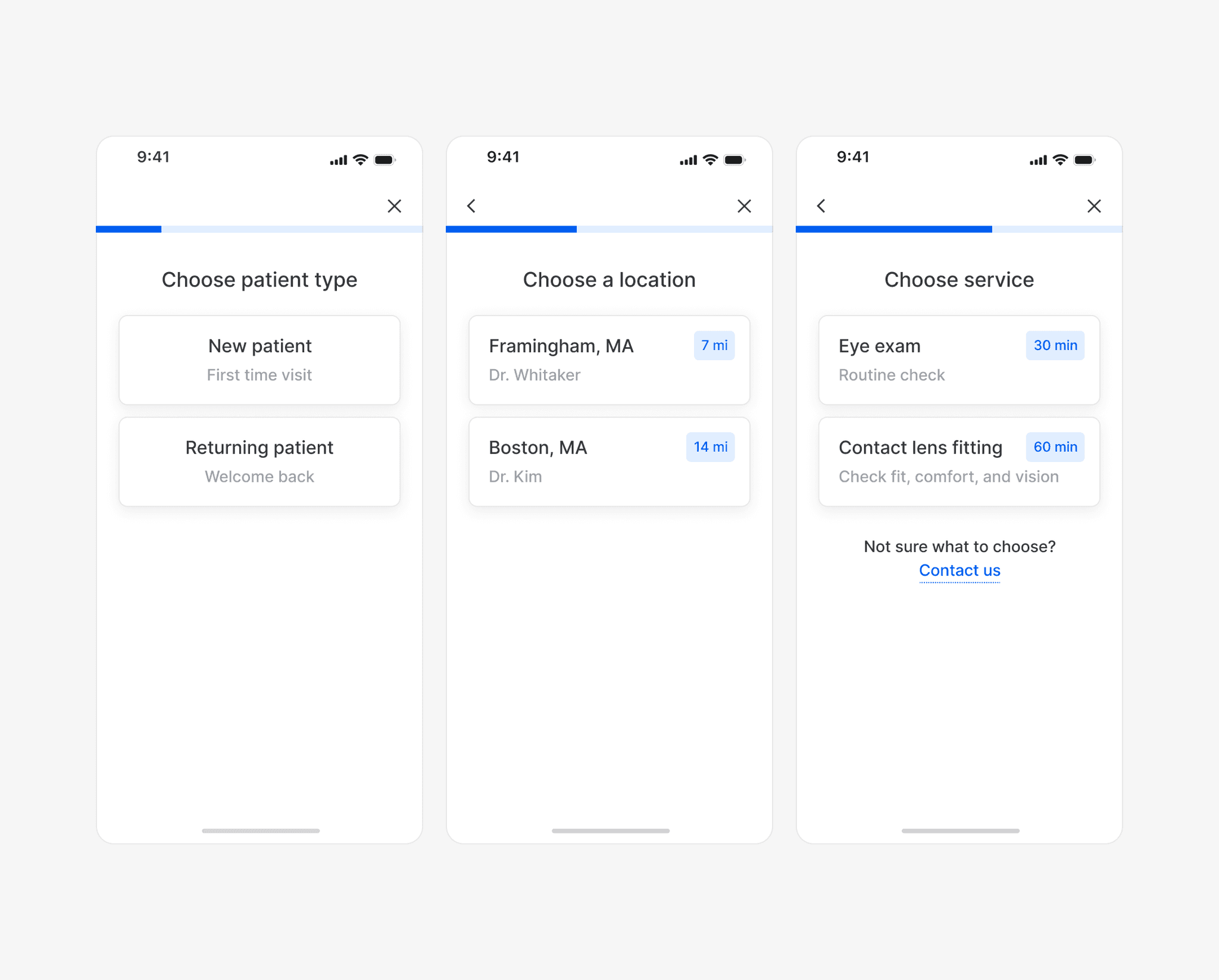
I redesigned the experience into a 6-step guided flow:
Patient type
Location
Service type
Provider (if applicable)
Time selection
Confirmation
This structure reduces the number of variables presented at each step, lowering cognitive load and improving decision clarity.
The interface was also shifted from a modal-based widget to a full-page flow, improving readability, mobile usability, and interaction consistency.
Reducing cognitive load by simplifying into simple binary choices
Iteration
I initially explored a 3-step flow, but each step still contained multiple decisions, keeping cognitive load high.
I moved to a more granular structure with single-focus steps, allowing eligibility to be established earlier and improving filtering and relevance.
The final 6-step flow uses one decision per screen to reduce complexity and improve clarity.
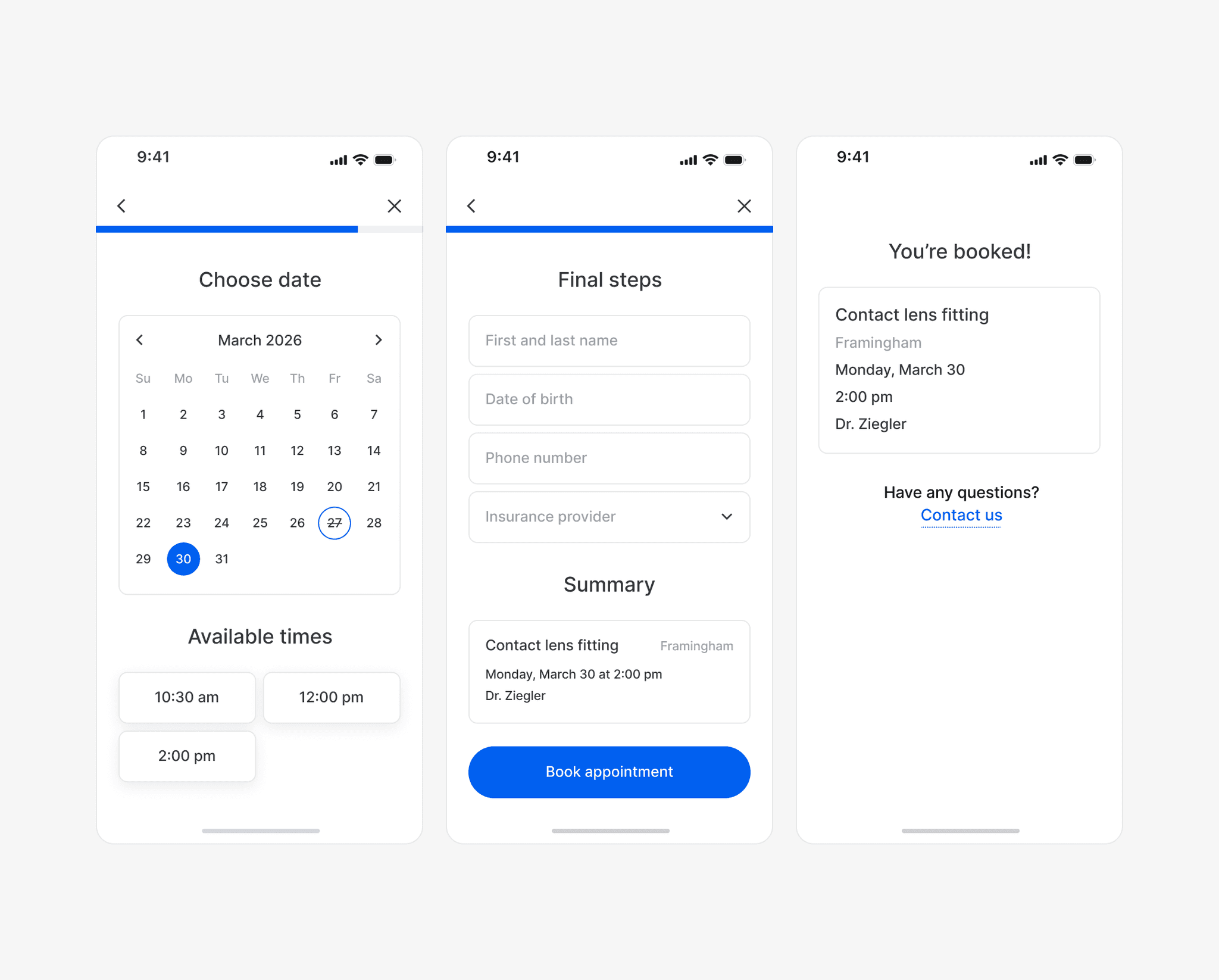
Previous iteration: Condensed flow but increased friction
Impact
By restructuring the booking experience into a guided, step-based flow, the redesign reduces early decision complexity and improves clarity throughout the scheduling process.
This approach would be expected to:
Reduce drop-off caused by decision overload in early screens
Improve booking completion rates by simplifying eligibility and service selection
Increase user confidence through clearer, sequential decision-making
Final design: Steps 1-3, Patient type, Location, Service
Final design: Steps 4-6, Date/time selection, Personal details, Confirmation
Hypothesis
Breaking the booking process into smaller, sequential decisions will reduce cognitive load and make the experience feel more manageable.
By guiding users through one decision at a time, users should be able to better understand their options, maintain context, and move through the booking flow with more confidence.